Wednesday, 28 May 2014

What's happening to me?


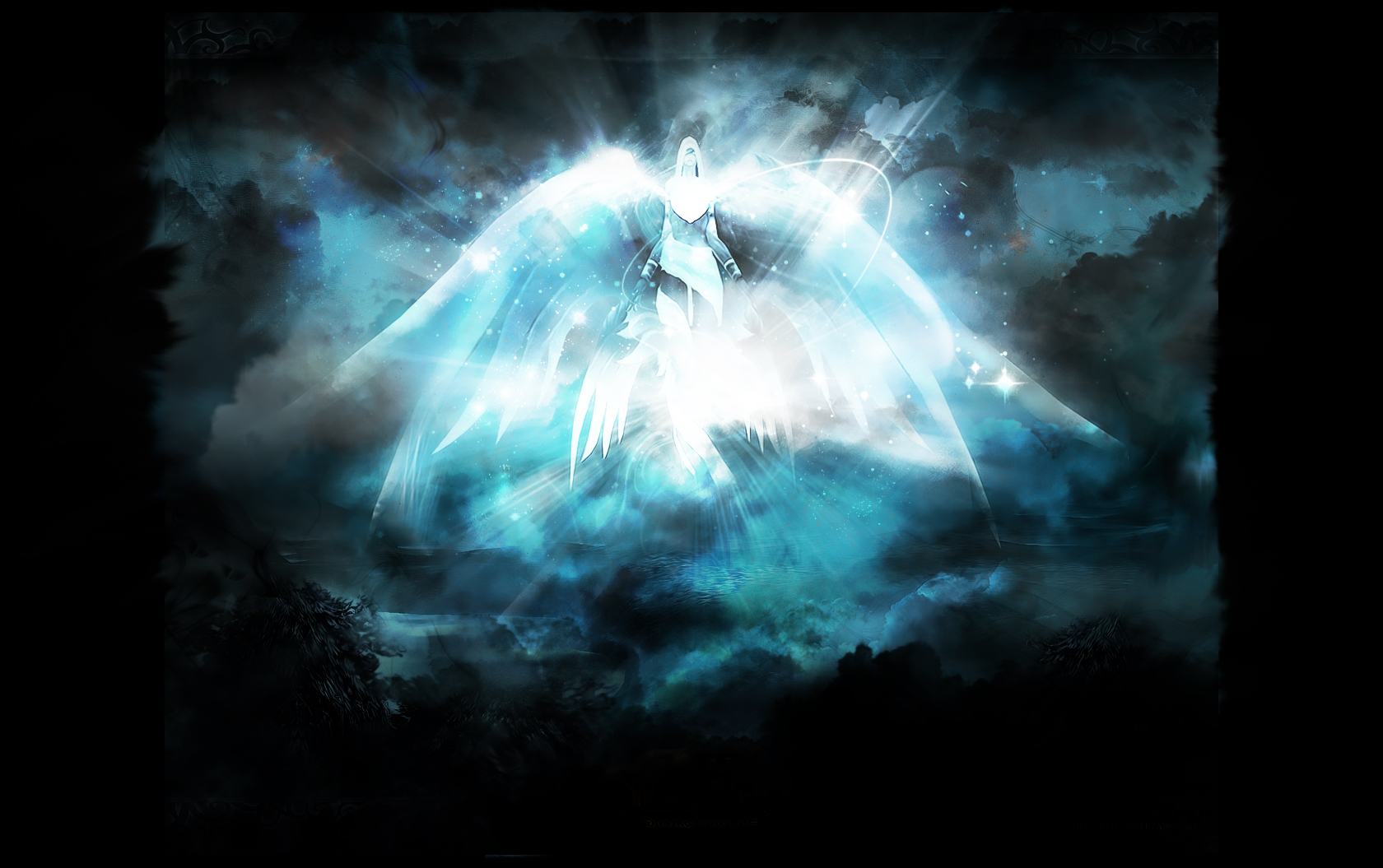
Guardian Spirit Quickremix by dj4star
A year ago I finally turned my back on my career in Social Housing. I had been trying to make my way within an organisation that was trying to reinvent itself, but actually tearing itself apart. This was a painful and bruising experience for me, and I wondered how on earth I had ever got involved with it in the first place.

I had decided to dedicate myself to Social Housing as a way of doing something worthwhile with my life after 20 years of writing computer programs. There were good times working with wonderful caring people to help make life better for some of the less fortunate in the social mix. This made it worth the grind and the knocks, but only just. Being used for target practice by interdepartmental snipers was not a part of my ideal.

But it's an ill wind, etc., and this kicking gave me the impetus finally to cut my ties to Housing and to follow my bliss, and so I got my life back on track. I sold the boat I had bought when the computer work dried up, and enrolled on celebrant training with Green Fuse.

Cut back to the present. I've changed. I'm still changing. As my course work progresses I find myself being drawn into increasingly spiritual realms. I have been watching old interviews with Joseph Campbell, Carl Jung and Alan Watts. Poetry, prayers and songs weave patterns of meaning in my head, and I resonate with the rhythms of the stars. I walk on holy ground. Sometimes it feels almost as if I could stretch out my arms and take flight. What's happening to me?

In my head I hear Abba:
I believe in angels
Something good in everything I see
I believe in angels
When I know the time is right for me
I'll cross the stream
I have a dream
...or Spirits Having Flown by the BeeGees:
I'd like to take you where my spirit flies
Through the empty skies we go alone
Never before having flown".
I think of the prayer attributed to Sir Walter Raleigh:
Disturb us, Lord, to dare more boldly,
To venture on wider seas
Where storms will show Your mastery;
Where losing sight of land,
We shall find the stars.
We ask You to push back
The horizons of our hopes;
And to push into the future
In strength, courage, hope, and love.



Wednesday, 23 April 2014

Book Review: Passages Of The Soul

Passages Of The Soul: James Roose-Evans, Element Books, 1994

The title of this book refers to the transitions, or passages, that occur between the various phases of ones life, and the fact - as stated in the cover notes - that "in our modern world... our own celebration of these fundamental events often amounts to no more than brief, superficial ceremonies", if they happen at all, which in most cases they don't. The author holds that "ritual is an essential part of a balanced, meaningful life".

Roose-Evans, now 86, was a theatre director of some renown with a number of impressive productions, initiatives, books and collaborations to his credit. In this book he writes about his experiences working mainly with young actors and dancers coming through their education in the USA of the 50s and 60s. 

In the opening chapter he sets the stage, drawing on the ideas of Carl Jung, Joseph Campbell and Meister Eckhart. The inner world is just as real as the outside world. "If we are in Tao - that place where all opposites are united - we have an inexplicable effect on our surroundings." This is all good stuff, which fills the reader with excitement and anticipation as he turns to chapter 2.

This is where it all falls down. The whole of the rest of the book is concerned in one way or other with exercises in self-expression for those in the performing arts. Roose-Evans, an inveterate man of the theatre, has fallen into the trap of mistaking theatre-land for the real world. The groups participating in his sessions are required to make meaningful gestures in a rope circle, to spontaneously express their feelings using only their hands or by carrying a bundle of bamboo canes and dropping them. We are told in ecstatic terms of how a singing group established a rapport with a remote African tribe by singing "ah" very loudly. For actual or aspiring performers this must surely be gripping stuff; for the rest of us, the most we can hope for is a fascinating insight into the thespian mentality.

If this had been intended as a primer in expressive dance it would have been a success. Since it set out to be about rite-of-passage rituals it has entirely missed its purpose. We read that you can't just make up a new ritual, that it has to arise from the collective unconscious to be truly meaningful. There follows a list of made-up rituals, some improvised. Roose-Evans seems oblivious to his own pomposity. He tells of how a woman once told him she was going to use his ritual in her workshops: "I was struck speechless because it is an exercise that requires handling with skill and sensitivity".

In fact there are sections and paragraphs here and there that on their own make the book worth looking at for anyone trying to make sense of life. If my criticism is harsh it is only through disappointment; it could have been so much better.

Thursday, 10 April 2014

Time Out

Quite recently I attended a funeral for a civic dignitary. The service was exactly what you would expect from the Church of England at its best: a big congregation, organ, hymns, priests, prayers, fulsome praise from family and colleagues. The one whose loss they mourned was a true individual, the kind they don't make any more.

The last few weeks I have been reading, writing thinking and talking about funerals as part of my study to become an independent funeral celebrant. Of late I noticed that on social occasions I would have nothing to say, and end up staring blankly into the distance, as if the whole scene was one I had watched so many times already that I had got bored with it.

By yesterday afternoon I had had enough. Death is like an insidious grey fog that creeps silently over the landscape of your mind, gradually thickening and cutting you off from other people, leaving you alone with your grey thoughts.

It's true that in confronting death you find life, and know it for the first time. But my advice would be this: having found life, hold fast to it.

I do not for one moment regret my decision to embark on this course. Being a funeral celebrant is a huge privilege. To bring comfort to the bereaved, to honour the life that has now gone out, to be the one to commend that soul to God, to eternity, to our memory, is to be human at a level of reality that is beyond the reach of most mortals. I will walk over fire and water. I will go up to the mountain.

But I will also celebrate life, in all its hope and fear, all its richness and trouble, all its beauty.
I hope you never fear those mountains in the distance
Never settle for the path of least resistance
Living might mean taking chances
But they're worth taking
Loving might be a mistake
But it's worth making...
And when you get the choice to sit it out or dance
I hope you dance
(Songwriters: SANDERS, MARK DANIEL / SILLERS, TIA M.
I Hope You Dance lyrics © Universal Music Publishing Group, Sony/ATV Music Publishing LLC)

In his book "Passages of the Soul", James Roose-Evans says:
We have no rituals for pregnancy, for a miscarriage or still-born child, for a broken marriage, relationship or home; none for a girl's first menstruation, or a boy's coming to puberty; none for the elders of our society. We have let ritual - its power and vitality, its deeper value and significance - almost disappear from our lives.
My task, as I see it, is to put it back again.

Wednesday, 26 March 2014

A tale of two cemeteries


On Monday I visited two local cemeteries. It was a cold and blustery afternoon, the sun struggling in vain to be glimpsed through the grey.

I drove to a nearby cemetery, and through the stone gateway on to a dead straight service road between rambling forgotten gravestones. On my left a Victorian Gothic chapel loomed, and then another identical one on the right, a couple of hundred yards away. They were each the size of a village church. Tyre tracks around the outside showed they had been attended, but the doors looked resolutely closed, no lights showed, and the phrase "Abandon hope all ye who enter here" sprang to mind.
Another cemetery

I parked the car and strolled around. From a distance a resident cat eyed me suspiciously. The place had the air of a ghost town. One monument about six feet tall was leaning at an angle of 30 degrees, the whole of the grave having subsided alarmingly. No flowers showed their faces this cold Spring day.

I took a pathway beyond a line of trees and found myself in a different area. Here were plenty of new plots, all laid out like slabs of meat in a butcher's shop window, scarcely an inch between them. Flowers kept vigil over the stones like silent mourners. I felt uneasy.

I suddenly realised that it was late afternoon, I was alone, the gates could be closed at any time and I would be locked in, so I headed back to the car with respectful haste and departed, exiting the gates with a sigh of relief.
Cemetery Gates by LknPL on DeviantArt

But I felt sorry that my visit had been so perfunctory, so I drove on to a village cemetery a few miles away.

Holt  cemetery stands opposite the church at the edge of the village. Nonetheless it is a municipal cemetery, not a church graveyard. The sign on the iron gateway says it is  the "New" cemetery, but the headstones are dated at least as far back as 1936. It is not large, but there are still some empty plots.

Graves nestle over a grassy bank, all tended with care. Daffodils were in bloom in clusters and strings, and many of the graves had fresh flowers or growing flowers. One had evidently been only recently filled, loose earth and cut flowers in a mound. Another stone for a man who died at the age of twenty showed the emblem of a motor-bike. Was this his passion, or the one that killed him? It doesn't say. Birds sang, the church looked on.

As I came away, I felt a deep sense of peace and tranquility. If I had to spent eternity anywhere, it would be here. This feeling persisted for hours after, and I was put in mind of the custom in the East to venerate the tombs of holy men. The tombs of the great Sufi poet Rumi, and of Hazrat Inayat Khan, who brought Sufi wisdom to the West, are visited by thousands of pilgrims, who simply want to be near to the resting place of these saints, to taste their beautiful persisting presence and peace, to be inspired.
The tomb of Hazrat Inayat Khan

Thursday, 6 March 2014

The local crem

Yesterday I popped over to the local crematorium, since I'd never been there before.

It was late on a Wednesday afternoon and the place was practically deserted. It was neatly laid out with paths and trees, and a number of different types of memorial: there were name tags on trees, name plaques lining the walks, some larger gravestones and so on.

A fair number of the markers had recent flowers placed by them, showing that they were regularly visited.

Despite the fact that a main road ran alongside, there was an air of tranquility about the place. I liked it. I went on and peeped through the door of the chapel. It looked empty so I went in. The chapel had no religious markings, so there was nothing for anyone to object to, whatever their belief.

©West Wiltshire Crematorium


As I entered I almost bumped into the chapel attendant, a cheerful young lady called Anna. She introduced me to the manager Richard. I told them I was a trainee with Green Fuse, and they were very interested and friendly. I met the resident organist, and talked about the music system. I tried out the acoustics, which were really good - I could hear my voice bouncing back from the walls.

I was mindful of the fact that I have never visited the crematorium where the mortal remains of my own mother and father lie scattered. There is virtually no record of their names there, so not worth the 100-mile journey. But somehow, in this place, surrounded by plots dedicated to other mothers and fathers, I felt a sort of common bond with all the sons and daughters making their way onward alone. It seemed that in visiting their resting place, I had also visited my parents' resting place.

Because of course my parents are not in Eltham or Semington. They might as well have a stone laid in Semington as anywhere else. They may be in Heaven; they are certainly in my heart and in every second thought, but you can't touch a thought, you can't bring a thought flowers.

Tuesday, 25 February 2014

Facebook Memorials

http://www.somethingawful.com/comedy-goldmine/paranormal-conspiracy-ghosts/1/

What happens to a person's Facebook account when they die?

I have occasionally wondered what would happen to all my on-line accounts if I were to die unexpectedly. On Facebook, for example, would my smiling face still come up on lists of 'People You May Know'? Would I still get friend requests from people who hadn't heard the news of my death? 

Fortunately, FB have already thought of this, and the story of how this came about can bee seen here:
http://www.facebook.com/notes/facebook/memories-of-friends-departed-endure-on-facebook/163091042130

Incidentally the policy has today changed so that the privacy settings on the account remain unchanged after death. So, depending on these settings, you can still see all those embarrassing snaps taken at the party or the photos of them lying on a beach in Crete. You can still see their timeline showing what they did on FB, as well as all the books, films and TV shows they loved and the causes they supported. And you can write your tribute on their wall.

In short, you have a virtual shrine dedicated to them.

I wrote in a previous post that we need memorials to friends and family who have died. This does not have to be a gravestone though. Imagine a memorial park where each person's name is linked by QR code or Bluetooth to a memorial Facebook page. You could sit in the tranquil setting where their remains are laid, looking at their old photos and videos on your mobile phone, and using an app (not yet developed), leave some virtual flowers to mark your visit.

Isn't science wonderful?

Tuesday, 11 February 2014

10/02/14 Life Goes On


Sunday of last week was Candlemas. In the Christian Church, it marks the presentation of Jesus at the Temple and is celebrated by the lighting and/or blessing of candles. The day is also known as Imbolc, Groundhog Day, and Brigid's Day, among other names. Brigid is the Pagan mother Goddess; the name Brigid is related to the word 'bright' and the root 'bel', meaning fair or beautiful; the pagan day marks the rebirth of the sun after Winter. In terms of the seasons, the day is half-way between the Winter Solstice and the Spring Equinox, the point where the year turns to look towards Spring. In agricultural terms, it marks the return to work on the land, when the first shoots are starting to show.

At this time of year, Wiccans will light multiple candles. It is traditional upon Imbolc, at sunset or just after ritual, to light every lamp in the house - if only for a few moments. Or, light candles in each room in honour of the Sun’s rebirth.
http://www.thewhitegoddess.co.uk/the_wheel_of_the_year/imbolc.asp

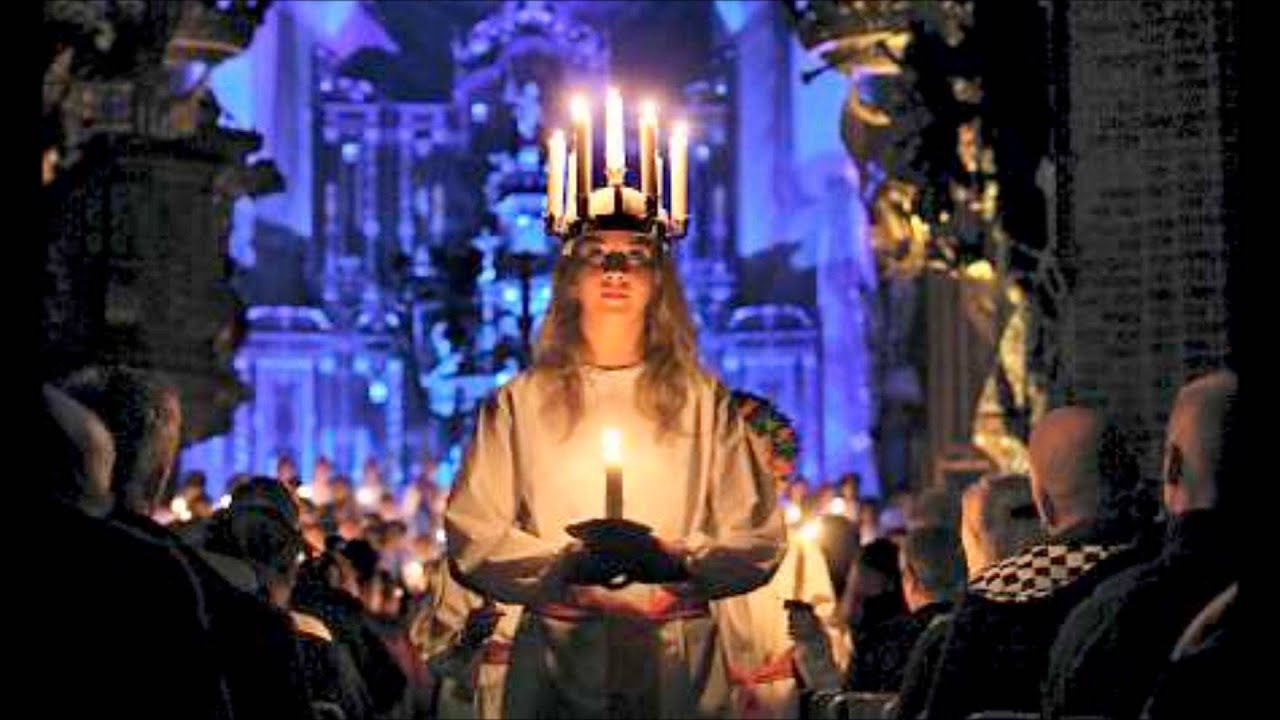
While this practice is rare today, it can still be seen on December 13th in Sweden, St Lucia's Day.
Around Christmas time in Sweden, one of the biggest celebrations is St. Lucia's Day (or St. Lucy's Day) on December 13th. The celebration comes from stories that were told by Monks who first brought Christianity to Sweden.

St Lucia was a young Christian girl who was martyred, killed for her faith, in 304AD. The most common story told about St Lucia is that she would secretly bring food to the persecuted Christians in Rome, who lived in hiding in the catacombs under the city. She would wear candles on her head so she had both her hands free to carry things. Lucy means 'light' so this is a very appropriate name.

December 13th was also the Winter Solstice, the shortest day of the year, in the old 'Julian' Calendar and a pagan festival of lights in Sweden was turned into St. Lucia's Day.

St. Lucia's Day is now celebrated by a girl dressing in a white dress with a red sash round her waist and a crown of candles on her head. Small children use electric candles but from about 12 years old, real candles are used!

The crown is made of Lingonberry branches which are evergreen and symbolise new life in winter. Schools normally have their own St. Lucia's and some town and villages also choose a girl to play St. Lucia in a procession where carols are sung.

A national Lucia is also chosen. Lucias also visit hospitals and old people's homes singing a song about St Lucia and handing out 'Pepparkakor', ginger snap biscuits.

Small children sometimes like dressing up as Lucia (with the help of their parents!). Also boys might dress up as 'Stjärngossar' (star boys) and girls might be 'tärnor' (like Lucia but without the candles).
http://www.whychristmas.com/cultures/sweden.shtml
 Here is a beautiful clip of this ceremony.


The words mean:
Night walks with a heavy step
Round yard and hearth,
As the sun departs from earth,
Shadows are brooding.
There in our dark house,
Walking with lit candles,
Santa Lucia, Santa Lucia!
Night walks grand, yet silent,
Now hear its gentle wings,
In every room so hushed,
Whispering like wings.
Look, at our threshold stands,
White-clad with light in her hair,
Santa Lucia, Santa Lucia!
Darkness shall take flight soon,
From earth's valleys.
So she speaks
Wonderful words to us:
A new day will rise again
From the rosy sky…
Santa Lucia, Santa Lucia!

There is a deep innate sense hard-wired into all of us that, for every Winter there will be a Spring;  for every end there will be a new beginning; for every despair there will be new hope; for everyone left alone there will be new love.
When the night has been too lonely
and the road has been too long,
and you think that love is only
for the lucky and the strong,
just remember in the winter
far beneath the bitter snows
lies the seed that with the sun's love
in the spring becomes the rose.
 "The Rose" Amanda McBroom (sung by Bette Midler)
And for all this, nature is never spent;
There lives the dearest freshness deep down things;
And though the last lights off the black West went
Oh, morning, at the brown brink eastward, springs—
Gods Grandeur by Gerard Manley Hopkins 

We know about the carbon cycle and the water cycle; we know the Laws of Conservation of Mass and Energy; Syd Barrett paraphrases the I-Ching: "Things cannot be destroyed once and for all." Even the cells of our bodies die and are replaced while our lives carry on. In astronomy. stars and planets are born out of the dust of supernovae, and if the planets have life, that life is made of stardust. How inspiring that our beautiful Earth and all its plants and animals were born out of the death of a star.

We know that when we die, our children and all the generations to come will continue to live as we lived, breathing the same air that we breathed.

Since ancient times, wisdom has held that our lives continue after our bodily death. Sufis believe that we pass through a lengthy recycling process, eventually returning to live once again on this planet.

Or do we just end? Are we destroyed once and for all? Does it even makes sense to expect a factual answer when we have a far greater Truth?