Showing posts with label Funerals. Show all posts

Saturday, 1 December 2018

Missing him


Today I was trying to think of a book I could read to a 14-year-old boy that I know, who is making a slow recovery in hospital. Then I remembered a book I had read at 14, a cracking yarn by ‘Charles’ (in reality Elfrida) Vipont called “The Heir of Craigs”.

I had always kept that book and despite the fact that I had not read it in fifty years, I could still see the cover clearly in my mind’s eye. When I went to get it however, there was no trace of it. Somehow, at some point, some house move maybe, I must have let it go. How could I do that? It was a part of my history, almost a part of me you could say. I felt a sense of loss – I no longer had this book that I hadn’t looked at in half a century.

There was no other way. Within half an hour I had found a second-hand copy in good condition with my favourite on-line bookseller, Abebooks, and soon it will be back with me once again, and I can breathe a sigh of relief.

If only you could do that with people.

In this last July I attended the funeral of my younger brother. It was a good funeral, the church was full and I delivered his eulogy without a hitch. A great gathering of friends and family was held at his favourite pub, and we all went home feeling we had given him the best send-off he could have hoped for. I carried on with my life and all was well. Actually he had lived 150 miles away and we only saw each other at very irregular intervals so his passing didn’t really change very much for me.

Last week, on a grey and blustery day, my older brother and sister, my deceased brother’s fiancĂ©e and his closest two friends gathered at the harbour a short drive from where he lived, and watched as his mortal remains rested briefly on the surface of the water before disappearing beneath the waves. It was an intimate moment, which brought us all together in a mutual bond of sorrow.

Now that the brother I rarely saw is gone, I miss him, and there is no replacement. He was the only one. His presence on the planet had been sufficient, just knowing he was there, and now he isn’t. I suppose if there’s one comforting thought that comes from all this, it’s that, hard as it may be to imagine this, other people probably think the same about me as I do for my brother. I hope my presence is on the whole a good one.

Tuesday, 13 January 2015

What a celebrant does

You are a child of the Universe,
No less than the trees and the stars,
You have a right to be here.
       (Desiderata, Max Ehrmann)


When the Ancients lay on the cool ground at night, looking up at the stars, which encrusted the heavens like an unfolding glittering white cloth, they liked to imagine patterns like the join-the-dots pictures you may have drawn when you were a child. Some of these they named after animals – the Great Bear, the Swan, the Scorpion; some were characters from story – Hercules, Cassiopeia, Cepheus.

In reality these are not groups of stars at all. They just look that way from Earth. But we could equally group them in different ways if we wanted. We could have the Fork-lift Truck, the Harley Davidson, Tower Bridge. Seeing patterns in things comes easily to us. This is how we make sense of the world, of history, of our own lives.

As with the stars, we don't have just one story to tell. When we write a job application we will include everything about our education, our relevant experience and our positions of responsibility. But we probably won't include the way we struggled with bullying at school, or the dedication and love of our parents. We won't include the one we love, and the day we first met. Yet these things also have their story, and they are more a part of us than our position at work.

While our mundane life plods on from education to qualification to position to promotion to retirement to death, inside we are super-heros on a great adventure. We face danger, injury and disease; we see friends and family through life and death; we witness the miracle of birth; we struggle with our weakness as much as with our greatness. Against all the odds we triumph.

This is our brilliant human existence. It is a story written in the stars, waiting to be told. Who will tell our story? Or will it be buried with our bones? The skill of a celebrant is to recognise you as a child of the Universe, no less than the trees and the stars, your life unfolding like a cloth of silver.

With each turn of life there is a death and a rebirth. When we are born, the waiting is over, the period of pregnancy ends. It is a joyful beginning, but there is also a sense of loss; ask any mother. We cross a threshold into the unknown. And so at each new stage of life: starting school, starting secondary school, leaving home, starting work, giving vows, - right through to retirement, each milestone a new beginning.

A celebration can be seen as a snapshot pasted up onto the storyboard of our life, recording each stage as we go through. But there is more to it than just this. Imagine for a moment that you finally worked out for yourself how space and time was really structured, an understanding that would end a hundred years of speculation. Naturally you would want to tell the world. Why? Because until you do, to all intents and purposes, it hasn't happened. Unless you share it, it is just something in your head. Likewise a ceremony actualises reality – it makes reality happen.

In the Jewish tradition, a statement can occur on three levels: the first is a thought – even a thought is an action; the next is the spoken word, which is more powerful than just a thought; the most potent of all is the deed. In business, a handshake, or in previous times a kiss, seals a deal. Wearing the ring seals the marriage. A ceremony binds an idea into fact.

A qualified celebrant can work with you to make a ceremony that is right for you where you are in your life, that says what you want to say, that has the right feel. It can combine words, music, light, colour, costume - plus doves, balloons, fireworks, anything! Or just a few well-chosen words in a solemn setting. It's your call. You matter.

Wednesday, 28 May 2014

What's happening to me?


Guardian Spirit Quickremix by dj4star
A year ago I finally turned my back on my career in Social Housing. I had been trying to make my way within an organisation that was trying to reinvent itself, but actually tearing itself apart. This was a painful and bruising experience for me, and I wondered how on earth I had ever got involved with it in the first place.

I had decided to dedicate myself to Social Housing as a way of doing something worthwhile with my life after 20 years of writing computer programs. There were good times working with wonderful caring people to help make life better for some of the less fortunate in the social mix. This made it worth the grind and the knocks, but only just. Being used for target practice by interdepartmental snipers was not a part of my ideal.

But it's an ill wind, etc., and this kicking gave me the impetus finally to cut my ties to Housing and to follow my bliss, and so I got my life back on track. I sold the boat I had bought when the computer work dried up, and enrolled on celebrant training with Green Fuse.

Cut back to the present. I've changed. I'm still changing. As my course work progresses I find myself being drawn into increasingly spiritual realms. I have been watching old interviews with Joseph Campbell, Carl Jung and Alan Watts. Poetry, prayers and songs weave patterns of meaning in my head, and I resonate with the rhythms of the stars. I walk on holy ground. Sometimes it feels almost as if I could stretch out my arms and take flight. What's happening to me?

In my head I hear Abba:
I believe in angels
Something good in everything I see
I believe in angels
When I know the time is right for me
I'll cross the stream
I have a dream
...or Spirits Having Flown by the BeeGees:
I'd like to take you where my spirit flies
Through the empty skies we go alone
Never before having flown".
I think of the prayer attributed to Sir Walter Raleigh:
Disturb us, Lord, to dare more boldly,
To venture on wider seas
Where storms will show Your mastery;
Where losing sight of land,
We shall find the stars.
We ask You to push back
The horizons of our hopes;
And to push into the future
In strength, courage, hope, and love.


Thursday, 10 April 2014

Time Out

Quite recently I attended a funeral for a civic dignitary. The service was exactly what you would expect from the Church of England at its best: a big congregation, organ, hymns, priests, prayers, fulsome praise from family and colleagues. The one whose loss they mourned was a true individual, the kind they don't make any more.

The last few weeks I have been reading, writing thinking and talking about funerals as part of my study to become an independent funeral celebrant. Of late I noticed that on social occasions I would have nothing to say, and end up staring blankly into the distance, as if the whole scene was one I had watched so many times already that I had got bored with it.

By yesterday afternoon I had had enough. Death is like an insidious grey fog that creeps silently over the landscape of your mind, gradually thickening and cutting you off from other people, leaving you alone with your grey thoughts.

It's true that in confronting death you find life, and know it for the first time. But my advice would be this: having found life, hold fast to it.

I do not for one moment regret my decision to embark on this course. Being a funeral celebrant is a huge privilege. To bring comfort to the bereaved, to honour the life that has now gone out, to be the one to commend that soul to God, to eternity, to our memory, is to be human at a level of reality that is beyond the reach of most mortals. I will walk over fire and water. I will go up to the mountain.

But I will also celebrate life, in all its hope and fear, all its richness and trouble, all its beauty.
I hope you never fear those mountains in the distance
Never settle for the path of least resistance
Living might mean taking chances
But they're worth taking
Loving might be a mistake
But it's worth making...
And when you get the choice to sit it out or dance
I hope you dance
(Songwriters: SANDERS, MARK DANIEL / SILLERS, TIA M.
I Hope You Dance lyrics © Universal Music Publishing Group, Sony/ATV Music Publishing LLC)

In his book "Passages of the Soul", James Roose-Evans says:
We have no rituals for pregnancy, for a miscarriage or still-born child, for a broken marriage, relationship or home; none for a girl's first menstruation, or a boy's coming to puberty; none for the elders of our society. We have let ritual - its power and vitality, its deeper value and significance - almost disappear from our lives.
My task, as I see it, is to put it back again.

Wednesday, 26 March 2014

A tale of two cemeteries


On Monday I visited two local cemeteries. It was a cold and blustery afternoon, the sun struggling in vain to be glimpsed through the grey.

I drove to a nearby cemetery, and through the stone gateway on to a dead straight service road between rambling forgotten gravestones. On my left a Victorian Gothic chapel loomed, and then another identical one on the right, a couple of hundred yards away. They were each the size of a village church. Tyre tracks around the outside showed they had been attended, but the doors looked resolutely closed, no lights showed, and the phrase "Abandon hope all ye who enter here" sprang to mind.
Another cemetery

I parked the car and strolled around. From a distance a resident cat eyed me suspiciously. The place had the air of a ghost town. One monument about six feet tall was leaning at an angle of 30 degrees, the whole of the grave having subsided alarmingly. No flowers showed their faces this cold Spring day.

I took a pathway beyond a line of trees and found myself in a different area. Here were plenty of new plots, all laid out like slabs of meat in a butcher's shop window, scarcely an inch between them. Flowers kept vigil over the stones like silent mourners. I felt uneasy.

I suddenly realised that it was late afternoon, I was alone, the gates could be closed at any time and I would be locked in, so I headed back to the car with respectful haste and departed, exiting the gates with a sigh of relief.
Cemetery Gates by LknPL on DeviantArt

But I felt sorry that my visit had been so perfunctory, so I drove on to a village cemetery a few miles away.

Holt  cemetery stands opposite the church at the edge of the village. Nonetheless it is a municipal cemetery, not a church graveyard. The sign on the iron gateway says it is  the "New" cemetery, but the headstones are dated at least as far back as 1936. It is not large, but there are still some empty plots.

Graves nestle over a grassy bank, all tended with care. Daffodils were in bloom in clusters and strings, and many of the graves had fresh flowers or growing flowers. One had evidently been only recently filled, loose earth and cut flowers in a mound. Another stone for a man who died at the age of twenty showed the emblem of a motor-bike. Was this his passion, or the one that killed him? It doesn't say. Birds sang, the church looked on.

As I came away, I felt a deep sense of peace and tranquility. If I had to spent eternity anywhere, it would be here. This feeling persisted for hours after, and I was put in mind of the custom in the East to venerate the tombs of holy men. The tombs of the great Sufi poet Rumi, and of Hazrat Inayat Khan, who brought Sufi wisdom to the West, are visited by thousands of pilgrims, who simply want to be near to the resting place of these saints, to taste their beautiful persisting presence and peace, to be inspired.
The tomb of Hazrat Inayat Khan

Thursday, 6 March 2014

The local crem

Yesterday I popped over to the local crematorium, since I'd never been there before.

It was late on a Wednesday afternoon and the place was practically deserted. It was neatly laid out with paths and trees, and a number of different types of memorial: there were name tags on trees, name plaques lining the walks, some larger gravestones and so on.

A fair number of the markers had recent flowers placed by them, showing that they were regularly visited.

Despite the fact that a main road ran alongside, there was an air of tranquility about the place. I liked it. I went on and peeped through the door of the chapel. It looked empty so I went in. The chapel had no religious markings, so there was nothing for anyone to object to, whatever their belief.

©West Wiltshire Crematorium


As I entered I almost bumped into the chapel attendant, a cheerful young lady called Anna. She introduced me to the manager Richard. I told them I was a trainee with Green Fuse, and they were very interested and friendly. I met the resident organist, and talked about the music system. I tried out the acoustics, which were really good - I could hear my voice bouncing back from the walls.

I was mindful of the fact that I have never visited the crematorium where the mortal remains of my own mother and father lie scattered. There is virtually no record of their names there, so not worth the 100-mile journey. But somehow, in this place, surrounded by plots dedicated to other mothers and fathers, I felt a sort of common bond with all the sons and daughters making their way onward alone. It seemed that in visiting their resting place, I had also visited my parents' resting place.

Because of course my parents are not in Eltham or Semington. They might as well have a stone laid in Semington as anywhere else. They may be in Heaven; they are certainly in my heart and in every second thought, but you can't touch a thought, you can't bring a thought flowers.

Friday, 24 January 2014

24/01/14 Breathe

Well that was exciting. 

18/12/13 Moved into house.
25/12/13 Christmas
11/01/14 Sale of boat finalised
12/01/14 Still living out of boxes
21/01/14 Bought a desk from Ikea. Assembled by half past midnight
22/01/14 Started research for Assignment 3.

That's the abbreviated history anyway. I haven't yet had any further feedback on the length of Assignment 2. This is a problem because if you discuss six purposes, then how they apply to a good funeral, then how they apply to a bad funeral, it leaves you with 50 words per purpose / funeral with little room for anything else.

Now I need to expand the shifting mood of a ceremony into 1500 words with reference to a funeral I have been to. The last suitable funeral I went to was about five years ago and I have pretty much forgotten it. Oh well.

When my mother died, one day I was talking to her, a week later she had vanished from history. After the house was sold, nothing remained to testify that she had ever existed. The only trace was in my not very reliable memory and a few old photos. Each day the crem shows a list of names of those who were cremated on that day. Big deal. What about the rest of the year? If I want, I can go to the spot where her ashes were scattered, but what's the point? It's just a bit of grass. There's nothing there. I can stay at home and look at grass.
Photos kindly supplied by Geograph, and may be reused subject to this creative commons usage licence.


So I went on-line and looked at what real people had to say. I went to a forum for bereaved mothers.
When my daughter Hope died I was afraid to go but I was drawn to her grave because I couldn't let go. A friend set me up with a friend who lost her daughter to a fire. She helped me with going on her birthday and I release balloons with messages from my friends and family. Then we come home and have a birthday cake and I donate toys in her honor. I also go alone and read the first book I ever bought for her. It helps me because now my kids who never got to know their sister also feel connected and I don't feel quiet (sic) so lonely. Also know it takes time !
I'll spare you the ten or so others like this one.

The point is - we are human beings, not productivity engines. We can't just flick a mental switch and carry on. Caring for our loved ones is what marks us out as humans, and we can't just stop because they are inconveniently dead. But love cannot exist in a vacuum; it has to be expressed. There has to be a ritual. This can be visiting a grave and talking to the person buried there, or leaving flowers or toys. It may make a mess but it is not 'wrong'. This is being human at its best.

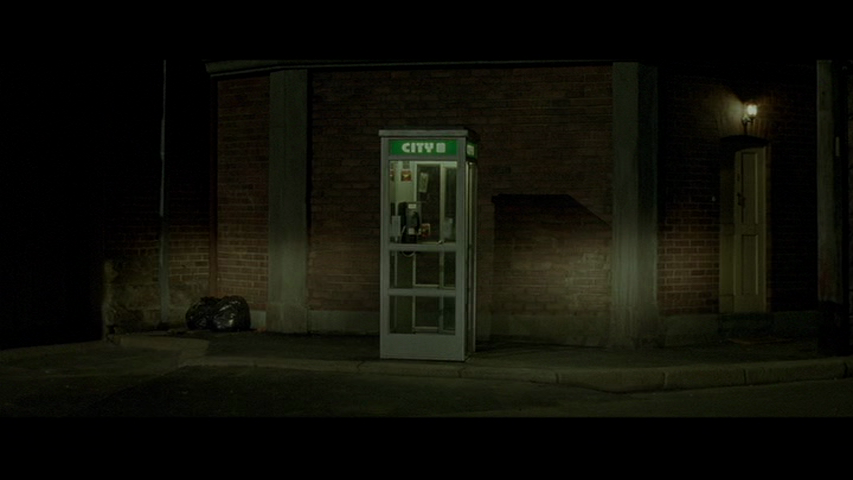
A written marker testifies to the physical existence of a person, when all other traces are gone. It is like the teleporting telephones in The Matrix. It is a touchstone, a point of contact. In the same way that you need the right number, so you need a marker with the right name or it will be meaningless.

A memorial transcends time. Future generations will journey across the world to visit the gravestone of a long dead ancestor. Bath Abbey receives a regular trickle of visitors seeking records of their ancestors' burials. As a society, we belittle these things at our great peril.

We need permanent anchor points that connect us to our loved ones and ancestors. The form these take is a matter for our sensitivity and ingenuity.

See also: http://www.theguardian.com/lifeandstyle/2014/jan/24/buried-not-cremated-family-descendants

6/12/13 Blowin' in the wind

I was reading the course notes, and a news story from the USA about the trend away from 'production line' funerals, towards a more person-centred procedure.

And then I realised that this is not just about funerals. For example there is home education and Small Schools ("more like a family, less like a factory"); there is the trend away from hospital births to home births; then there are self-build homes. But running directly counter to this is central government and the Establishment. I wondered how long it would be until our lives were governed more by community councils and less by central bureaucracies.


Bath Small School: More like a family, less like a factory.
The small school exists to provide a holistic education for 10-16 year-olds in a human-scale environment.
Because classes are small the curriculum can be adapted to suit the needs of the students.
Lessons are not confined to the classroom; visits to exhibitions, the theatre, ecological projects and adventure training form an important part of the curriculum.
Students learn in an atmosphere of friendliness and mutual respect that allows their individuality room to grow.

3/12/13 This is it


So. This is my journal.

It's now nine days since I left Dart Mills. The three days there were extraordinary. The sun shone, the scenery glowed gold and green and blue. I felt exhilarated.

The people I met, I would be happy to call them my friends for life. I felt engaged with the learning with an intensity that I have rarely experienced before.

It took me at least two days after returning to come back down to planet Earth.

Since then I have completed the Eulogy. I was surprised at how, when I actually put pen to paper, the words flowed and the piece took shape. I had expected to go through several revisions but in fact I had to make fairly few changes to the first draft.

It was harder for me to maintain a sufficiently sensitive tone in my dialogue with the student whose uncle I was describing. This was a salutary reminder to me that it was she who 'owned' her uncle, not me. In the end though, we were both happy with what I'd written.

Now I would like to concentrate on the course and follow up lines of research that I find interesting. Instead I will have to devote much of my time to selling the boat. I now have an interested buyer as well as an interested renter. All I need now is to seal a deal. So we are at the negotiation stage.


Selling the boat is part of the strategy of becoming a celebrant, which began last April when I started to give  the boat a face-lift. Since the logistics of boating make it difficult even to pursue the celebrants course, let alone enter upon a new career, I have to sell up. This is a good time in my life to move on, as I am getting older and the rigours of boat life are harder on me than before. The proceeds of the sale will also enable me to fund the start-up phase of my self-employment.

I have also been able to raise the course fees by taking a cash lump sum from an old pension fund.

This is however all a vexation and a distraction from focusing on the funeral  work, and the sooner it is all behind me the better.

As a new starter I'm finding the course structure - in terms of assignments and activities - rather bewildering. I trust it will all become clear as I go along.

I am particularly interested in the idea of so-called DIY funerals and would like to find out more about this area, and about how my services might possibly fit in with it.