Showing posts with label Burials. Show all posts

Sunday, 15 March 2015

Life Goes On

© Clifford Smith 2014

Life goes on, you know.
I woke up early again today
so I got up, had a cup of tea,

sat by the window where I could see
the blue-tits round the feeder
pecking away

I always try to catch Thought For The Day
on Radio 2. It was a buddhist this time, nice man,
talking about the weather

Did a bit of tidying up in the kitchen
It gets so dirty! While I was at it I polished the kettle.
It looks like new

The house looks lovely you know. I got some
new sheets and pillow cases in the week.
So fresh and comfy

You would have liked it. You were always
on about getting new sheets.
Well, now I have.

Yes, life goes on all right without you
my love. It was hard at first I must admit,
but I got over it

And then I noticed something strange.
You were dead and gone all right
no doubt about that

But death can't take away my love
for you. And though I cannot hold you in my arms,
You're still safe inside my heart

where you always were. So nothing's changed,
really. And any world that gave someone like you to me
can't be all bad, can it?


Wednesday, 26 March 2014

A tale of two cemeteries


On Monday I visited two local cemeteries. It was a cold and blustery afternoon, the sun struggling in vain to be glimpsed through the grey.

I drove to a nearby cemetery, and through the stone gateway on to a dead straight service road between rambling forgotten gravestones. On my left a Victorian Gothic chapel loomed, and then another identical one on the right, a couple of hundred yards away. They were each the size of a village church. Tyre tracks around the outside showed they had been attended, but the doors looked resolutely closed, no lights showed, and the phrase "Abandon hope all ye who enter here" sprang to mind.
Another cemetery

I parked the car and strolled around. From a distance a resident cat eyed me suspiciously. The place had the air of a ghost town. One monument about six feet tall was leaning at an angle of 30 degrees, the whole of the grave having subsided alarmingly. No flowers showed their faces this cold Spring day.

I took a pathway beyond a line of trees and found myself in a different area. Here were plenty of new plots, all laid out like slabs of meat in a butcher's shop window, scarcely an inch between them. Flowers kept vigil over the stones like silent mourners. I felt uneasy.

I suddenly realised that it was late afternoon, I was alone, the gates could be closed at any time and I would be locked in, so I headed back to the car with respectful haste and departed, exiting the gates with a sigh of relief.
Cemetery Gates by LknPL on DeviantArt

But I felt sorry that my visit had been so perfunctory, so I drove on to a village cemetery a few miles away.

Holt  cemetery stands opposite the church at the edge of the village. Nonetheless it is a municipal cemetery, not a church graveyard. The sign on the iron gateway says it is  the "New" cemetery, but the headstones are dated at least as far back as 1936. It is not large, but there are still some empty plots.

Graves nestle over a grassy bank, all tended with care. Daffodils were in bloom in clusters and strings, and many of the graves had fresh flowers or growing flowers. One had evidently been only recently filled, loose earth and cut flowers in a mound. Another stone for a man who died at the age of twenty showed the emblem of a motor-bike. Was this his passion, or the one that killed him? It doesn't say. Birds sang, the church looked on.

As I came away, I felt a deep sense of peace and tranquility. If I had to spent eternity anywhere, it would be here. This feeling persisted for hours after, and I was put in mind of the custom in the East to venerate the tombs of holy men. The tombs of the great Sufi poet Rumi, and of Hazrat Inayat Khan, who brought Sufi wisdom to the West, are visited by thousands of pilgrims, who simply want to be near to the resting place of these saints, to taste their beautiful persisting presence and peace, to be inspired.
The tomb of Hazrat Inayat Khan

Friday, 24 January 2014

24/01/14 Breathe

Well that was exciting. 

18/12/13 Moved into house.
25/12/13 Christmas
11/01/14 Sale of boat finalised
12/01/14 Still living out of boxes
21/01/14 Bought a desk from Ikea. Assembled by half past midnight
22/01/14 Started research for Assignment 3.

That's the abbreviated history anyway. I haven't yet had any further feedback on the length of Assignment 2. This is a problem because if you discuss six purposes, then how they apply to a good funeral, then how they apply to a bad funeral, it leaves you with 50 words per purpose / funeral with little room for anything else.

Now I need to expand the shifting mood of a ceremony into 1500 words with reference to a funeral I have been to. The last suitable funeral I went to was about five years ago and I have pretty much forgotten it. Oh well.

When my mother died, one day I was talking to her, a week later she had vanished from history. After the house was sold, nothing remained to testify that she had ever existed. The only trace was in my not very reliable memory and a few old photos. Each day the crem shows a list of names of those who were cremated on that day. Big deal. What about the rest of the year? If I want, I can go to the spot where her ashes were scattered, but what's the point? It's just a bit of grass. There's nothing there. I can stay at home and look at grass.
Photos kindly supplied by Geograph, and may be reused subject to this creative commons usage licence.


So I went on-line and looked at what real people had to say. I went to a forum for bereaved mothers.
When my daughter Hope died I was afraid to go but I was drawn to her grave because I couldn't let go. A friend set me up with a friend who lost her daughter to a fire. She helped me with going on her birthday and I release balloons with messages from my friends and family. Then we come home and have a birthday cake and I donate toys in her honor. I also go alone and read the first book I ever bought for her. It helps me because now my kids who never got to know their sister also feel connected and I don't feel quiet (sic) so lonely. Also know it takes time !
I'll spare you the ten or so others like this one.

The point is - we are human beings, not productivity engines. We can't just flick a mental switch and carry on. Caring for our loved ones is what marks us out as humans, and we can't just stop because they are inconveniently dead. But love cannot exist in a vacuum; it has to be expressed. There has to be a ritual. This can be visiting a grave and talking to the person buried there, or leaving flowers or toys. It may make a mess but it is not 'wrong'. This is being human at its best.

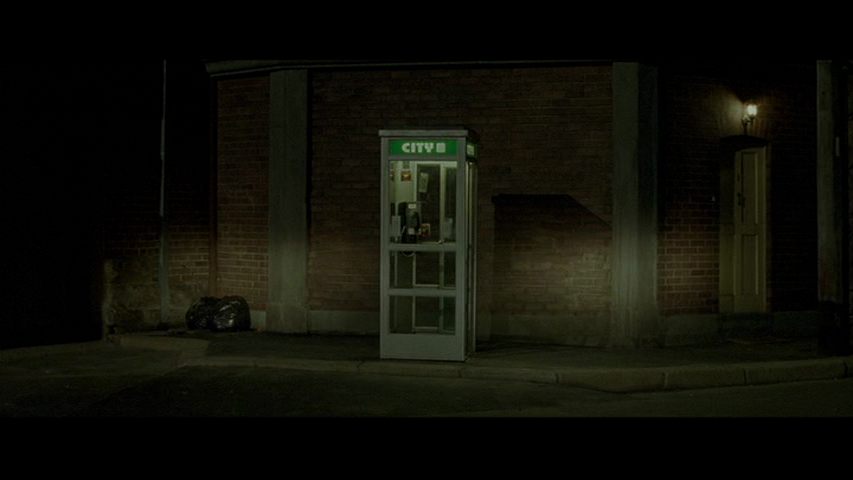
A written marker testifies to the physical existence of a person, when all other traces are gone. It is like the teleporting telephones in The Matrix. It is a touchstone, a point of contact. In the same way that you need the right number, so you need a marker with the right name or it will be meaningless.

A memorial transcends time. Future generations will journey across the world to visit the gravestone of a long dead ancestor. Bath Abbey receives a regular trickle of visitors seeking records of their ancestors' burials. As a society, we belittle these things at our great peril.

We need permanent anchor points that connect us to our loved ones and ancestors. The form these take is a matter for our sensitivity and ingenuity.

See also: http://www.theguardian.com/lifeandstyle/2014/jan/24/buried-not-cremated-family-descendants